
When I set out to write my new “column” about HelloGiggles in my bookletter (book blog?), I felt like one of the last people on the internet who even knew what HelloGiggles was. Even when HelloGiggles was a pretty big deal, it was hard to talk about. Not emotionally, but say “HelloGiggles” out loud. No one knows what you’re trying to say, and even if someone was familiar with the website, it took saying, “Zooey Deschanel started it?” complete with millennial vocal uptick, to get them to understand what I was talking about.
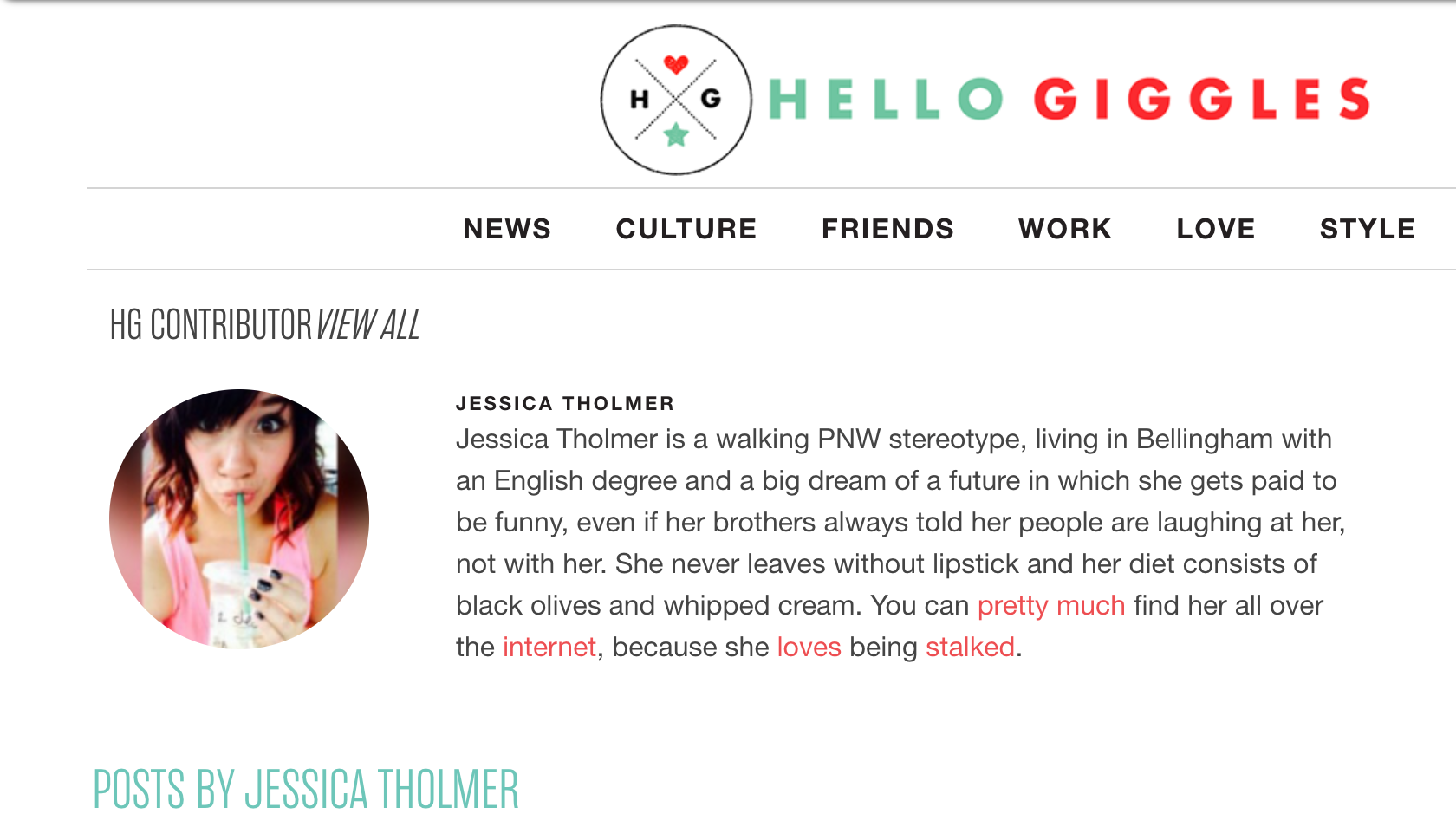
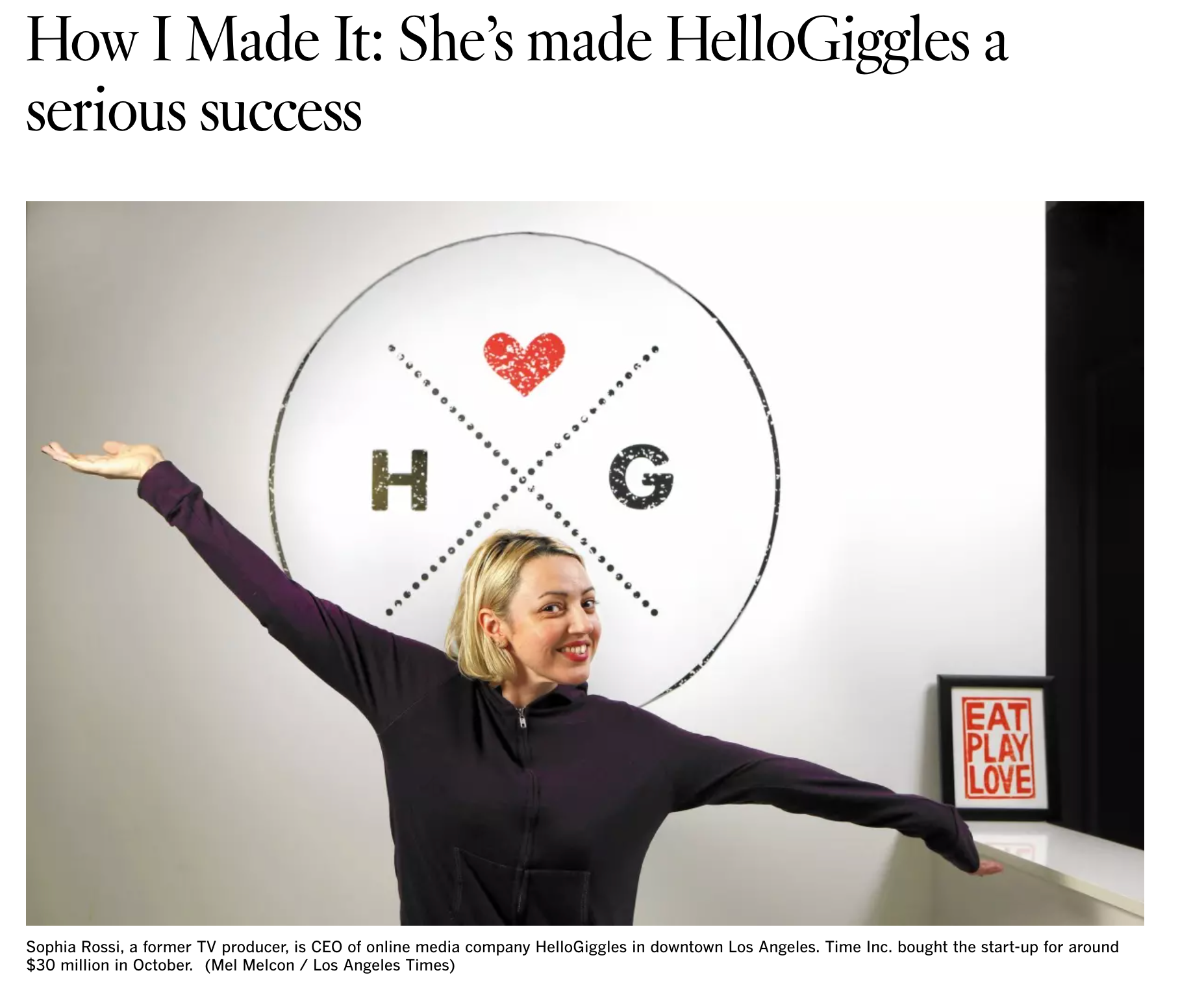
But I’m not the only person who knows what HelloGiggles is, and I guess I’m not the only person still thinking about it. Imagine me saying, “Well, hello, giggles!” when a former HelloGiggles writer (and one of my irl besties) sent the link to Sophia Rivka Rossi’s latest Substack, which I didn’t know she had.
My initial reaction to seeing Rossi’s Substack post titled, “Happy Anniversary Hellogiggles!” was distress. I felt immediately annoyed and knew I couldn’t handle reading whatever the hell she had to say about HelloGiggles. I had never really said it out loud, but I largely blame Rossi for HelloGiggles’s downfall, even if that feels unfair. I know the good corners of the internet never last, and obviously that isn’t Rossi’s fault. But some things certainly are.
I finally read it, and the tldr of Rossi’s post is that she misses HelloGiggles, is sad that it’s gone, and thinks she should recreate it.
Rossi begins the post by explaining that HelloGiggles was meant to be like Funny or Die but for and by women who were “genuinely funny and had things to say” because, at the time, “everything online felt like it was either how to wear the dress day to night or Perez Hilton gossip style,” and they (she and the other creators, aforementioned Deschanel and Molly McAleer, the best one imo) wanted something more.
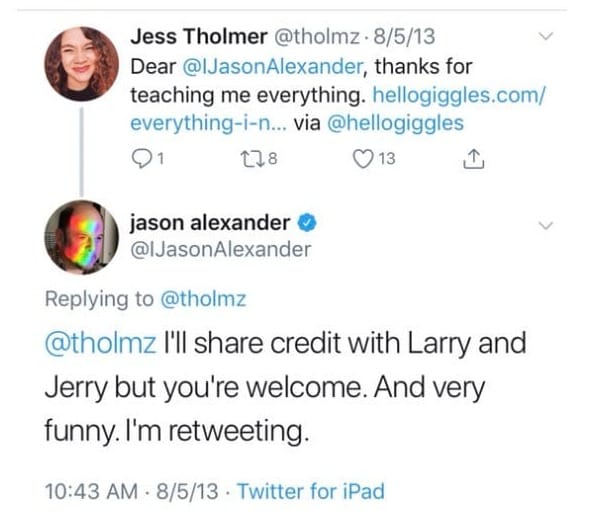
Rossi goes on to brag on HelloGiggles, noting the early pieces (like mine!) that were about “loving Babysitter Club books, favorite gummy bears ranked…and so much nail art.” She waxes nostalgic about facebook metrics when traffic on that platform meant something (kind of everything, actually) and boy, do I remember it, well and fondly! The Simpsons facebook page shared tons of my HelloGiggles posts about their characters and how much it meant to me. Celebrities like Gillian Anderson, Mindy Kaling, and Hank Azaria read the things I wrote about their characters and reposted them, usually with a compliment. Jason Alexander called me funny.
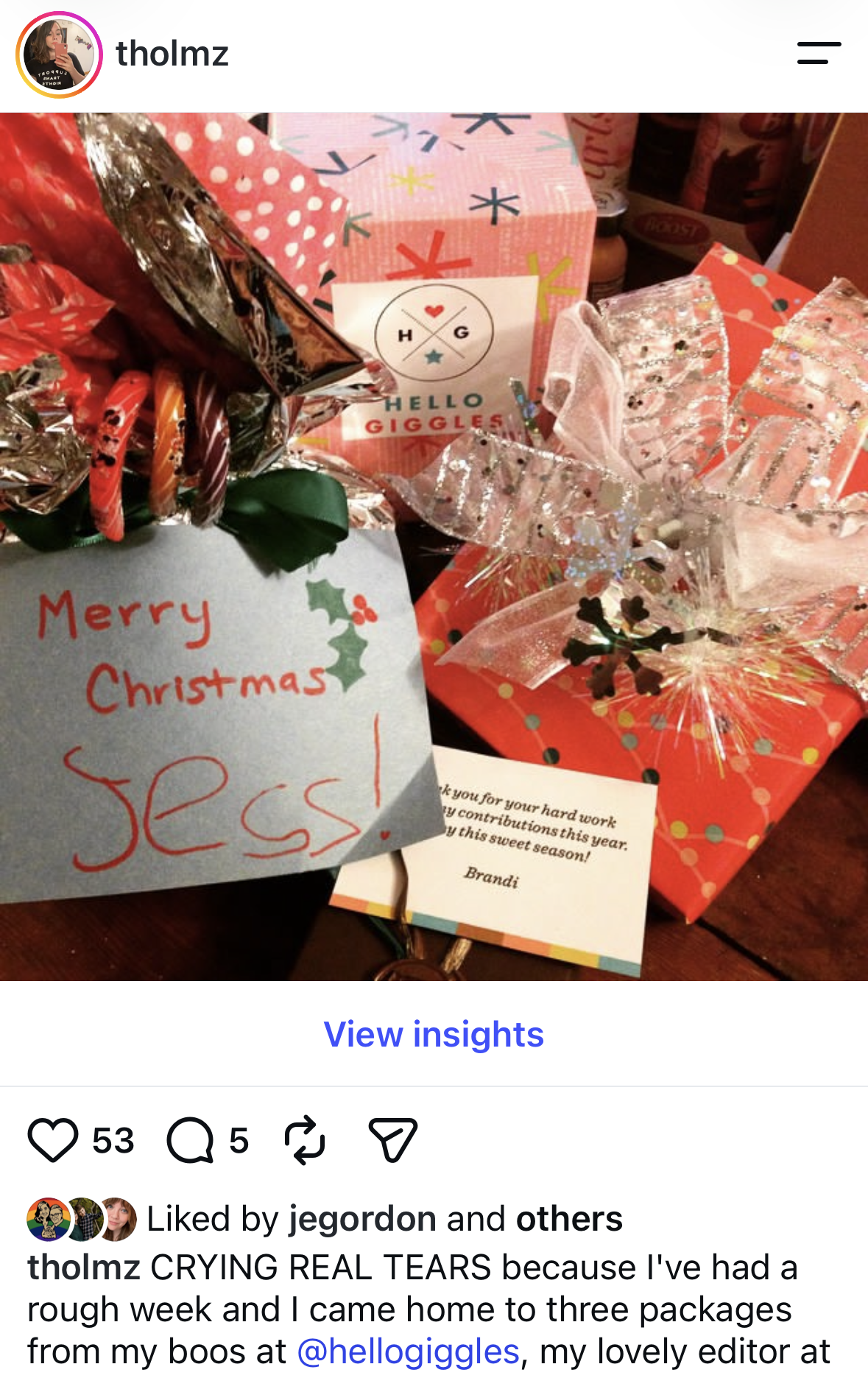
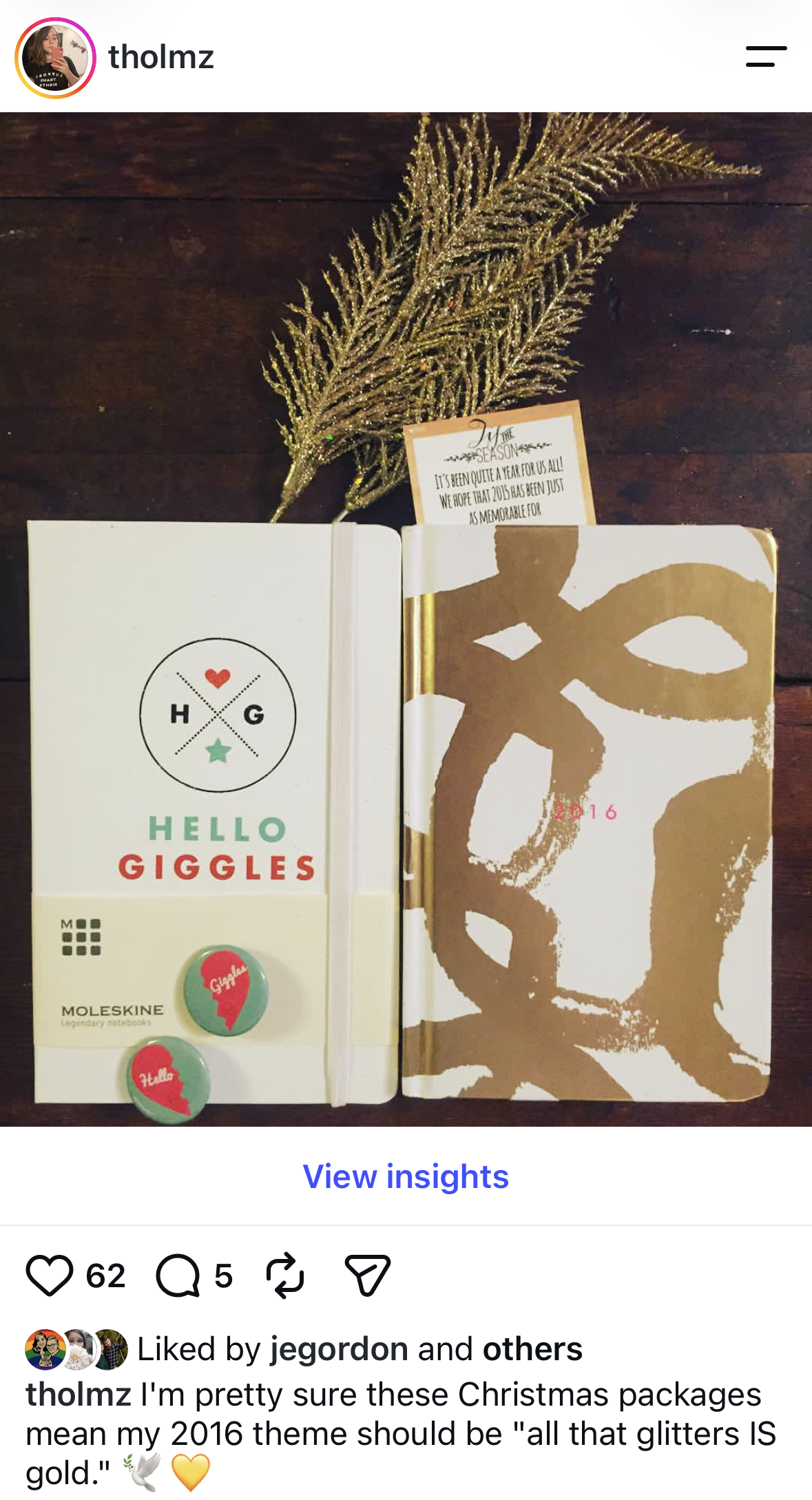
Everything was all just easy and fun in the beginning of HelloGiggles, and I felt cherished. HelloGiggles would send me gifts for Valentine’s Day (cards signed by the founders, including Zooey!), Christmas gifts, invitations to the office (when they got one), and eventually, they started offering money! Money to write the things that I had been writing for free for years! What a fun time it was online.
Rossi continues, saying that HelloGiggles had “incredible writers,” but adds that it was necessary to eventually bring in “the adults who helped us build real infrastructure,” which is kind of an offensive thing to say. I was young when I wrote for HelloGiggles, but I was an adult, as were literally all of my peers, many of whom went on to very successful careers as journalists and editors. We all knew how to build infrastructure, and we all would have been happy to contribute our ideas and expertise. What we, the contributors, couldn’t have known is that HelloGiggles didn’t just want infrastructure. HelloGiggles wanted to sell out.
Throughout her Substack post, Rossi tries her best to thank the contributors and editors, many of whom built the website’s popularity from the ground up for free, but it falls short. I would be surprised if Rossi knew any of our names, especially the “little people” like me who was one of HelloGiggles’s most loyal and consistent contributors, and who certainly gets to claim a bit of the website’s early success.
In the same breath as she claims they needed “adults” to “build the infrastructure,” she also says it was just a “cozy place online” and wasn’t planned. They weren’t trying to be whimsical or wise; they were “just trying to be a connected community.”
It did feel like a connected community at the beginning, but as it grew and became more popular, it became clear that HelloGiggles had a white-girl clique problem. I know they were a much better and more supportive place than many other media outlets, online and otherwise. But the truth is, I really started to feel that I did not fit in, as a not-skinny, not-totally-white girl who was not from LA or New York, didn’t have any famous connections, and didn’t have money or travel experience. I was loved online, but I wasn’t cool online. Kind of like my experience as a person. I felt amazing writing for HelloGiggles in the beginning, but as it got more popular, so did its contributors. They also got hotter, skinnier, whiter, and more popular online, which made me feel less amazing and more like an alien outsider. A feeling I was quite familiar with, but one that I hadn’t felt there, yet.
Rossi’s post is essentially about how much she misses HelloGiggles. In the same breath that she writes about what a blessing it was to “sell to Time Inc. at the peak of the website era,” she also claims to be heartbroken. It turns out that earning millions of dollars by selling out isn’t everything it’s cracked up to be. Rossi admits that HelloGiggles exists now in name only, adding that “Time Inc. sold to Meredith. Meredith sold to People Inc. They own the name. They took down all the posts.”
I don’t even know who the hell Meredith is.
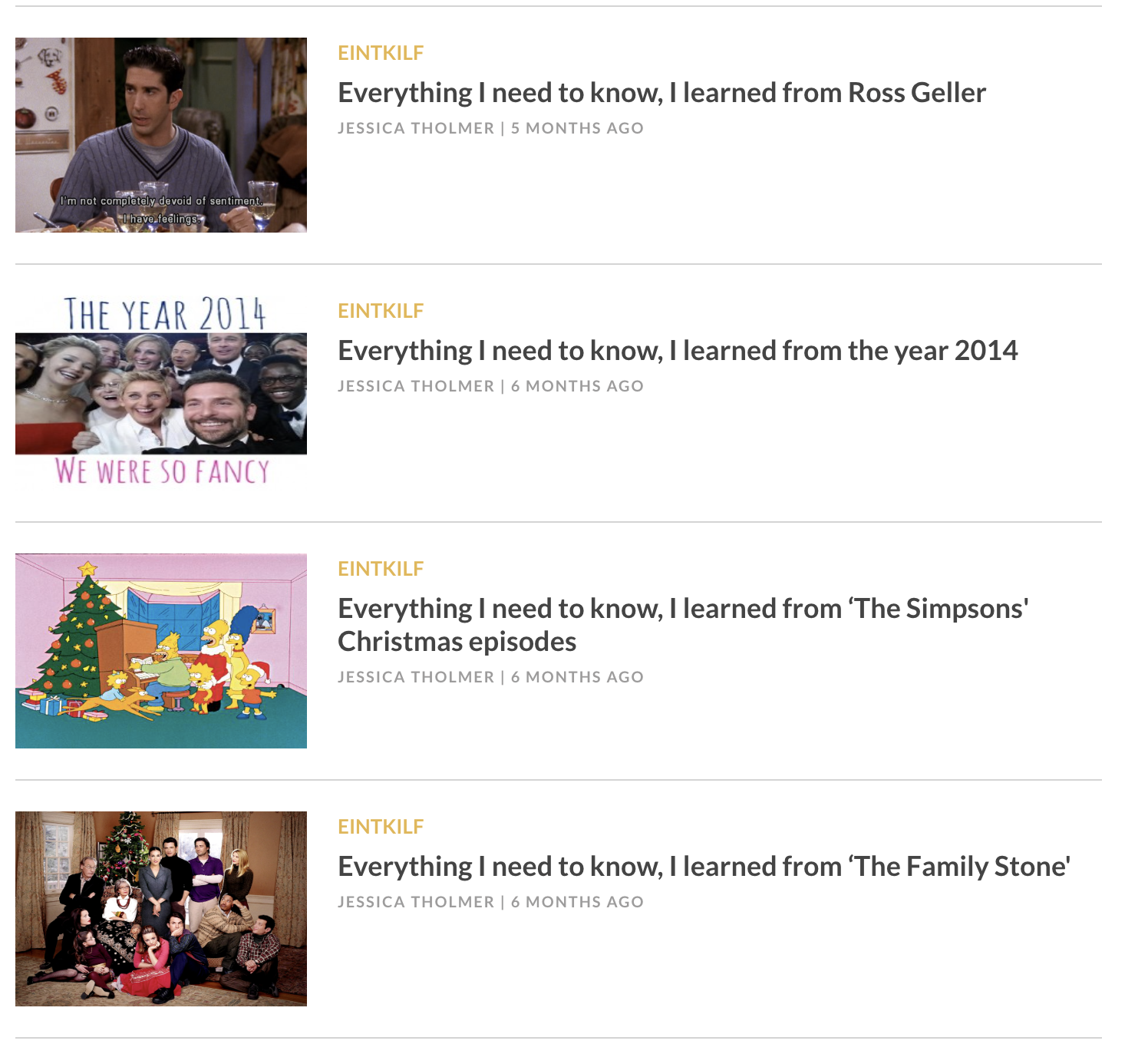
I was pushed out of HelloGiggles, partly because of poor management and partly because of everything I said above about not being enough for them. For years, my column was published every single Monday morning. By the end, I was begging editors to publish my column. After having my hard work ghosted more than once, I dropped my column, Everything I Need To Know I Learned From (EINTKILF), down to once a month, instead of weekly.

Eventually, I let them know I was done because I felt bad about myself, having to beg them to notice me after years of regular contributions.
A few of us former contributors connected when all the posts came down, and HelloGiggles.com ceased to exist. Some of us, hopefully all of us!, saw this coming and saved or downloaded our work. I have almost a decade of work I poured into that website. I saved most of it, but it doesn’t capture the magic. The GIFs are frozen, the images broken, the context lost.
Rossi misses the magic, too, but the difference is, she’s one of the reasons it doesn’t exist anymore. Sure, Rossi (and Deschanel and McAleer) could have turned down Time’s offer, not sold for millions, not allowed HelloGiggles to shift from a lifestyle website for gals to a lifestyle website about what Kylie Jenner was using on her face, hair, and body to look like, well, Kylie Jenner. It’s not that Rossi and Co. are responsible for the commodification of the internet; it’s that they didn’t try to protect us. They were For The Girls until money showed up, and they were simply For The Ads.
The entire point of Rossi’s post, besides reflection, is that she wants to “do it again.” Her life both got bigger (she got skinny and started publicly hanging out with really famous people all of the time) and quieter (famous people suck, so I’m sure it did) after HelloGiggles. I don’t know Rossi’s entire background, but she writes that “when you come from not having much and then suddenly you do, there’s a version of you that grips stability so tightly you forget what hunger felt like.” I doubt she understands this at the level I do. She concludes that paragraph with, “No one feels bad for the Girl Boss!” which isn’t true. Plenty of people feel bad for the girl bosses of the world. It’s why we still have them.
But I don’t.
Rossi goes on to say that HelloGiggles doesn’t need to come back; it needs to “grow up.” She says we still want escape, and self-expression, and harmless curiosity. That “niche media” is “back” and “individual writers are building real audiences.” Rossi suggests the creation of a “curated editorial hub for women who have outgrown the algorithm.” She calls it a “digital salon.” There’s too much content, Rossi says, as she adds to the content with her post. She writes that “brilliant writers are scattered across hundreds of Substacks with no shared home,” which is an incredibly narrow view. People have been blogging on Substack and other platforms for years, but now famous or semi-famous people are starting Substack accounts, gaining the largest audiences, and getting the most promotion from the platform. Which sucks for people like me, who consistently write but don’t have the name “Lena Dunham” to get me any attention.
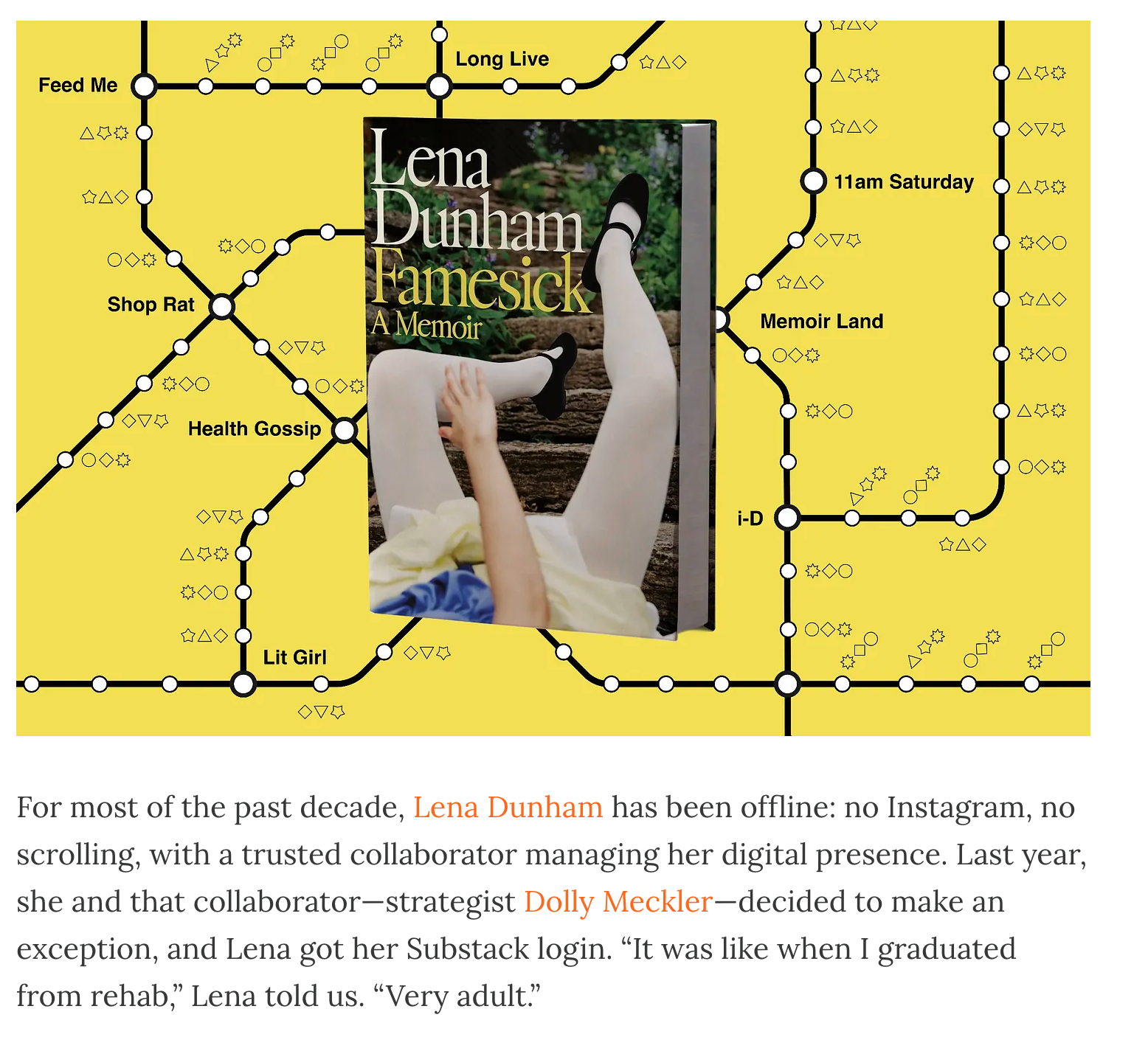
It’s a nice thought Rossi has, but she’s not talking about “the little people,” the writers who are good at writing, thinking, and have interesting stories to tell. She’s thinking about, well, Lena Dunham. Forgive me if I don’t think it's a bad thing that people are writing on Substack (and other platforms, like Ghost, which does not platform nazis). I am not upset that no one is collecting writers from Substack and monetizing their shit. Especially since, if someone like Rossi does that (again), it’ll look like what happened to HelloGiggles.
"The model is a contributor model because that’s the only model I’ve ever believed in. Established Substack writers and emerging voices publish under a single umbrella while maintaining their own platforms and IP. I wanna curate. I wanna cross-promote. I help build the audience infrastructure so writers can focus on the writing. The pitch deck version is simple: make your art, we’ll help people find it.” - Sophia Rossi
Rossi wants to relaunch a HelloGiggles-like website to cover topics that ElDeR mIlLeNnIaLs want to read about. As she puts it, things like “modern love, divorce, and affairs, so many affairs happening! Fertility and non-fertility. Ambition and reinvention. Faith, food, and fashion. Money, wealth, and nervous system health. The aesthetics of adult life.”
To me, this reads, “I want to use and monetize the experiences of the people I used and monetized the first time,” and “I hope I get to cash in on their experiences the way I did before.”
Rossi does something in this post that she’s always done best: she invites writers and editors to reach out, to reply, to let her know if this resonates with them. Of course it does. Of course, the hundreds of HelloGiggles contributors reading Rossi’s post want to write or edit for her again. As Rossi writes in her Substack post, “This is how HelloGiggles started. Not with a business plan, but with fifty people who said yes.” The “fifty people who said yes” to HelloGiggles are likely the same people who would say yes to another version of HelloGiggles.
I get that it’s inspiring and nostalgic to think about rebooting HelloGiggles because we’re missing all the things HelloGiggles represented, and how fun the internet was in 2012. But Rossi’s post doesn’t at all reflect the reality of the contributors who made HelloGiggles and websites like it.
It’s sad, and hard, and frustrating to be taken advantage of by publications, major or minor. It’s sad and hard and frustrating to contribute tirelessly to something only to see that something get Very Big while your contributions become small, meaningless, and ultimately forgotten. It’s hard to see your column become very popular, get a lot of likes, comments, and followers, only to be phased out for things that matter more. Famous People, Experiences, and Money. And Pull. And Connections.
HelloGiggles was an incredible experience, and it was a disappointing one. It made me feel so included, and then so left out. I wasn’t white enough, hot enough, nepo-baby enough for HelloGiggles, in the end.
But in the beginning, I was exactly what they wanted and needed.
Rossi ends her post by writing, “If any of this sounds like the editorial room you’ve been missing, subscribe, share, reply. Let’s build this together.”
The internet that welcomed, then monetized, then sold out and killed HelloGiggles will not be recovered by people like Rossi, who welcomed, then monetized, then sold out, then killed HelloGiggles. HelloGiggles couldn’t exist today in the same way, and people like Rossi have shown that money, influence, power, and notoriety mean more to them than the heart of the matter.
HelloGiggles was so fun, and such a community that I’m still deeply connected to many of its early contributors. But what HelloGiggles ended up as wasn’t a place for “people who are done doom scrolling and ready to gather and giggle,” it was a place for the creators to make money by writing the exact same garbage every other lifestyle website was writing while taking advantage of their employees and contributors.
I’d strongly encourage people not to buy into the nostalgia Rossi is pushing. The answer to bringing back corners of the internet that are worth being in isn’t to rely on the people who sold us out in the first place. If we want a place full of millennial nostalgia, honesty, sexuality, and pop culture, it cannot be led by Sophia Rossi, or Zooey Deschanel, or white women like Reese Witherspoon who are fake-worried about women being "left behind" in the digital age.
I am no longer following white women into the sun. Even for nostalgic giggles.


Member discussion